
Mina Rush | ejewishphilanthropy | July 16, 2026
This summer, the Jewish educational community is saying goodbye to one of its most influential institutions. After nearly two decades of shaping the field of Israel education, The iCenter closed its doors yesterday.
For many of us, the news is bittersweet. Institutions that help define a profession become far more than organizations. They become spaces where educators discover mentors, colleagues, language and purpose. They influence not only what we teach, but how we think about teaching itself. Yet perhaps the true measure of an institution is not whether it exists forever. Perhaps it is whether its ideas continue to shape the future long after its doors have closed. That is the legacy The iCenter leaves behind.
When The iCenter was founded nearly 18 years ago, Israel education occupied a very different place within Jewish education. Israel was often taught through isolated historical events, current events or celebrations. Educators cared deeply about Israel, but few had opportunities to study Israel education as a discipline or to develop a sophisticated pedagogical approach for helping learners build meaningful, enduring relationships with Israel. The iCenter recognized this need long before much of the field did. Its founders understood that excellence in Israel education would not come simply from creating better lessons. It would come from investing in educators.
Through professional development, certification programs, graduate study, conferences and communities of practice, The iCenter elevated Israel education from a collection of resources to a recognized field of educational practice. It challenged educators to deepen their own knowledge, wrestle with complexity, cultivate curiosity; and develop the confidence to facilitate meaningful learning experiences rather than simply deliver information.
Its influence extended far beyond the materials it produced; it shaped how thousands of educators understood their work. That impact cannot be measured only by the number of workshops offered or resources created. It is measured by the educators who returned to their classrooms more knowledgeable, more thoughtful and more confident than when they arrived. It is also measured by the students whose understanding of Israel became richer because their teachers first experienced transformative learning themselves.
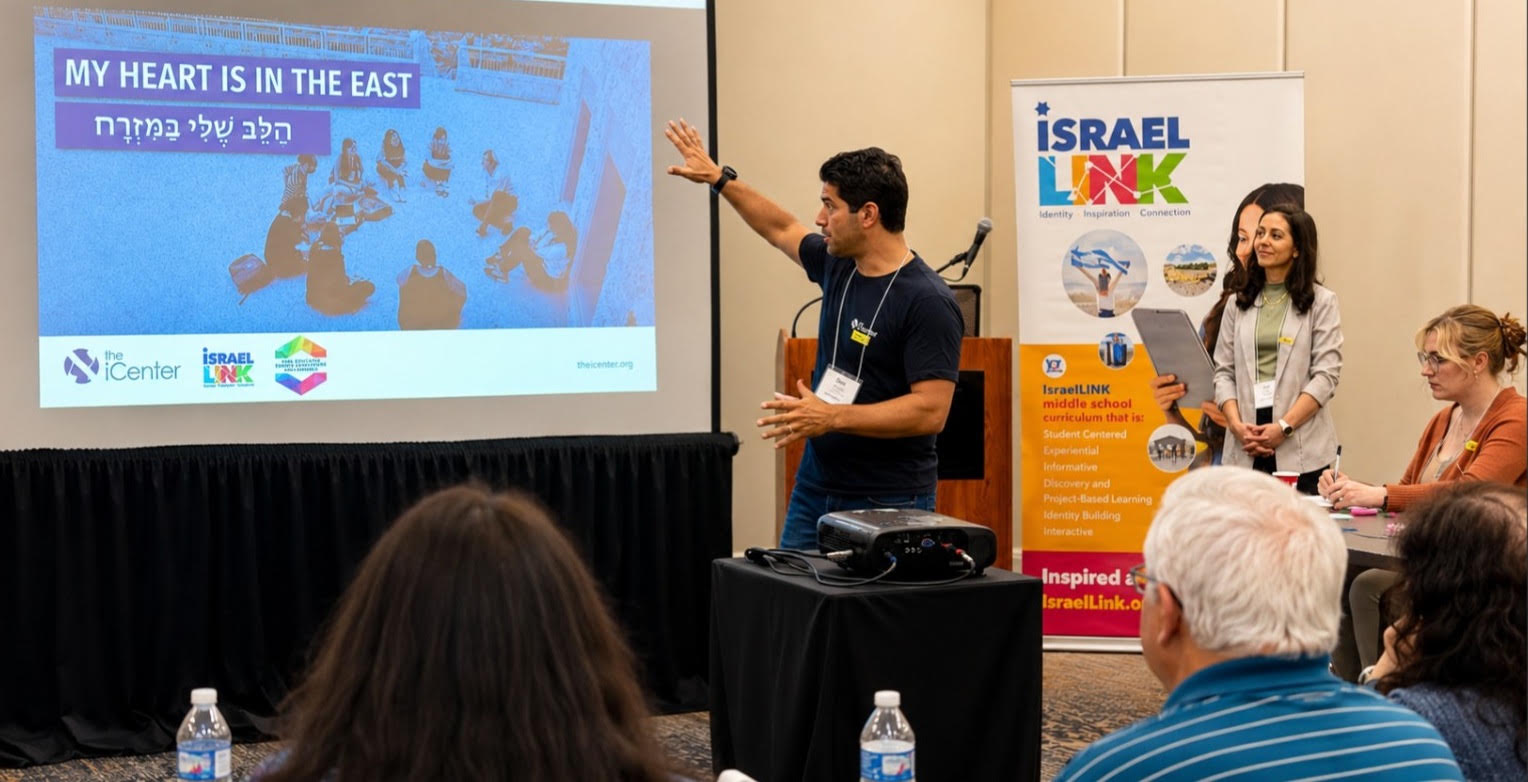
I can only speak from personal experience, but I know I am not alone. Every member of the IsraelLINK team has participated in The iCenter’s professional development, certification programs or graduate studies. Our educational philosophy, centered on inquiry, relationships, multiple perspectives; and learner-centered education, was profoundly influenced by the work The iCenter pioneered. Like so many others across the field, we are beneficiaries of that investment.
My own journey as an Israel educator was shaped in ways I could not have anticipated. The iCenter certainly expanded my knowledge and strengthened my practice, but its greatest gift was something far less tangible. It challenged many of the assumptions I carried with me. It taught me to ask better questions before offering answers. It cultivated deep listening, intellectual curiosity and the humility to engage perspectives different from my own without sacrificing my own convictions.
Looking back, I realize that The iCenter did far more than teach me how to educate about Israel. It changed the way I learn, the way I lead; and the way I engage the world. That is the kind of legacy no curriculum alone can create.
The greatest investment we can make in Israel education is not just in content, but also in the educators who bring it to life. Curriculum evolves, educational resources are revised and technologies change. But educators who are deeply knowledgeable, professionally confident and committed to lifelong learning become multipliers; over the course of their careers, they shape thousands of students, mentor colleagues and strengthen communities. The iCenter understood this from its very beginning — and in doing so, transformed not only what Israel education looks like today; but also who is leading it.
IsraelLINK is deeply honored to become one of several organizations entrusted with preserving more than 150 of The iCenter’s educational resources and making them available through our platform and an open-access digital repository.
Foundations invest millions of dollars developing educational models, intellectual capital, leadership pipelines and communities of practice. Those investments should not disappear simply because an organization’s lifecycle comes to an end, but continue to educate, inspire and evolve long after the original organization has completed its work. That requires intentional stewardship. Educational resources cannot simply be archived. They must remain living documents. They must continue to be taught, challenged, adapted, expanded and placed into the hands of new educators facing new realities.
The responsibility now belongs to all of us — not only to IsraelLINK, but to every organization, educator, school, congregation and community leader committed to strengthening Israel education. The future of our field depends less on preserving institutions than on preserving the intellectual curiosity, educational excellence and collaborative spirit that built the field in the first place.
More than 2,000 years ago, Rabbi Tarfon offered a teaching that feels remarkably relevant to this moment: “It is not your duty to finish the work, but neither are you at liberty to abandon it” (Pirket Avot:2:16). The work of strengthening Israel education has never belonged to one organization alone. It belongs to a community of educators committed to helping learners encounter Israel with knowledge, nuance, curiosity and intellectual rigor.
The thousands of educators whose practice, confidence and professional identity were shaped by The iCenter are living proof that its work will not be abandoned. They carry its ideas into classrooms, schools, congregations and communities every day. We are deeply honored to serve as one of the next stewards of these extraordinary educational resources, preserving them, building upon them and making them accessible for the educators who will shape the next generation. That may be the greatest legacy any educational institution could hope to leave.
Mina Rush is the executive director of classroom education for StandWithUs and the creator of the IsraelLINK interactive Israel education platform.
Read the full article here.