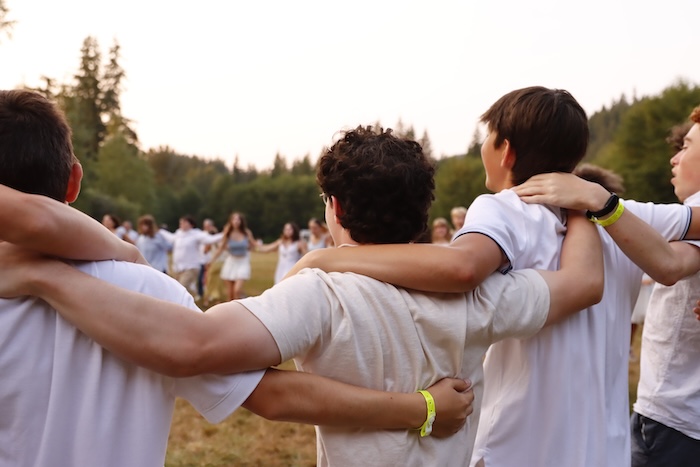

Getting Involved: How Families Can Foster Jewish Educational Spaces
Jewish families have an important opportunity to help their child feel confident in their identity — and a responsibility to show their kids that Jewish culture, history, and traditions are beautiful and worth sharing. While some of the most meaningful lessons about identity, community and solidarity begin at home, it shouldn’t stop there.
When parents and students bring education, curiosity and connection outside the home and into their schools and communities, they create opportunities for people of all backgrounds to learn, grow and thrive together.
So, if you’re a parent looking to foster Jewish pride, build community, and help your child stand against antisemitism, here are a few ways to get started.

Encourage Your Child to Join a Jewish Club
Jewish clubs offer dedicated, welcoming spaces for students to foster celebration, education, and connection. They might host a holiday activity, bring in a speaker, discuss Jewish history, organize a Jewish American Heritage Month program, or simply give students a place to spend time together and learn from one another.
If your child already has a Jewish club at their school, encourage them to attend a meeting. Even better, suggest that they invite a friend to come along too.
Help Them Start Their Own Club
If there isn’t already a Jewish club at your child’s school, encourage them to consider starting their own. Parents can help by researching school requirements, connecting their child with a faculty advisor, and helping identify educational resources or ideas for programming.
A club doesn’t need dozens of members or an elaborate calendar to make an impact. Sometimes it starts with a few students, a teacher willing to help, and something worth sharing.

Invite Friends, Including Interfaith Allies
Sometimes the most effective way to challenge stereotypes is simply to give people a chance to get to know one another. Whether it’s a school club, community program, cultural celebration, or educational event, encourage your child to invite friends and allies of different faiths and backgrounds.
Inviting non-Jewish classmates creates an opportunity for them to learn firsthand about Jewish culture and identity, ask questions, and build relationships. An ally does not need to know everything about Jewish history or antisemitism to show up. They can listen, learn, attend a meeting, ask respectful questions, support Jewish classmates, and offer their own unique perspective.
Take Learning Beyond the Classroom
School isn’t the only place where children can learn, connect, and build confidence in their Jewish identity. Throughout the year, families can look for educational programs, community gatherings, speakers, and other opportunities to learn together. Attending these events can give children a broader sense of Jewish community while introducing them to ideas and experiences they can bring back to their schools.
Here in San Diego, the StandWithUs Antisemitism Task Force provides ongoing opportunities for community members of all ages to stay informed, get involved, and support Jewish safety and solidarity.
[Discover Our Programs] [Explore Our Events]
Parents can make participation a family activity by attending an educational program together. The more opportunities young people have to learn, the more confident they can become in sharing that knowledge with others.
Teach Kids That Their Voice Matters
Fostering Jewish educational spaces teaches kids that they can be proud of their background and beliefs, that they can ask questions when something does not seem right, and that they can ask for help when an issue is bigger than something they should manage on their own.
Just as importantly, it reminds them that Jewish pride belongs in everyday life, not just in response to antisemitism. Joining a club, celebrating a holiday, attending an educational event or inviting a friend to learn about Jewish culture are all ways of affirming Jewish identity proactively and positively.
Create Lasting Community
When parents model curiosity, pride, and participation, they permit their children to do the same. When young people open Jewish spaces to their friends, they help transform unfamiliarity into understanding. And when Jewish families and allies participate together, they help create schools and communities where Jewish students are not simply included, but understood and valued.
Ready to get involved? Learn more about the Antisemitism Task Force at StandWithUs San Diego and look for a program your family can attend together to continue the conversation beyond the classroom.